Every month, the Chocolate Milk Cult reaches over a million Builders, Startup Founders, Investors, Policy Makers, Leaders, and more. If you’d like to meet other members of our community, please fill out this contact form here (I will never sell your data nor will I make intros w/o your explicit permission)- https://forms.gle/Pi1pGLuS1FmzXoLr6
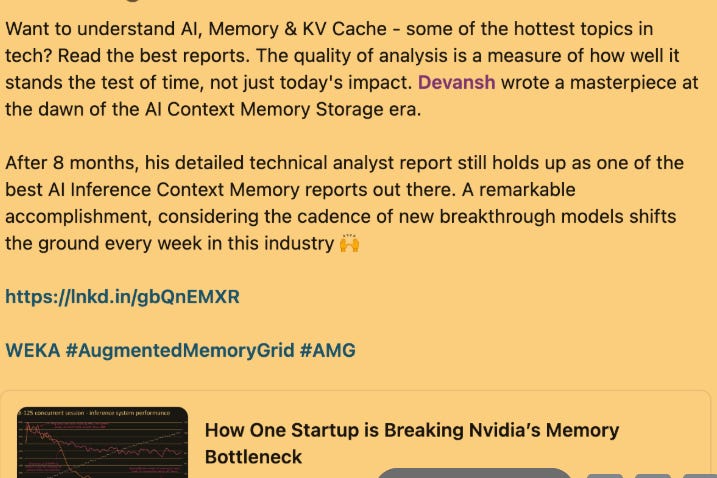
About a week ago, I was offered a multimillion-dollar role by a very wealthy investor. They had been reading this newsletter and were impressed by the range of subjects we cover. Model architecture, infrastructure, hardware, economics, company strategy, and technical areas I had sometimes never worked on before writing about them (such as this deep dive into Weka and the memory bottleneck in AI)—
More than anything else, they were interested in the speed. How was I able to read so much about very different fields, and build a deep enough map to write deep dives on them so regularly? Yes AI helps, but they wnated to know how to use it most effectively to be able to assess multiple emerging industries and make predictions accordingly.
This article is a breakdown that process.
Most people waste enormous amounts of time when they try to understand a new technology. They begin with papers, terminology, architectures, benchmarks, and implementation details. Weeks later, they know a lot more, but they may still be unable to answer the basic questions that matter.
To me, knowledge is about decision making power: it’s most useful when you can use it to make meaningfully decisions to move your agenda. This means tha you have to be able to answer questions such as
Why does this technology exist now?
What constraint does it remove?
Who benefits from it?
What could prevent it from succeeding?
Does it change anything important enough for you to act?
and many others quickly so you can make the important decisions. Such questions tell me which technical details deserve attention and which ones can be ignored for now.
This creates an iterative process. You learn enough to form an initial view. That view tells you where the uncertainty is. You then go deeper only where resolving that uncertainty could change your decision. This process builds a much memorable (and more actionable) understanding of what you’re studying.
Let’s break it down in depth.
To access the full article—and all premium breakdowns going forward/written prior—upgrade to a premium subscription below.
If you believe deep insight deserves support, become a premium subscriber to allow me to keep doing the same.
Flexible pricing available—pay what matches your budget here.
Most companies offer learning or professional development budgets. You can expense this subscription using the email template linked here.